


 Español
 中文简体
 عربى
- JINZEN Sewing Machine Spare Parts
- JINZEN Accessories
- JUKI Sewing Machine Spare Parts
- BROTHER Sewing Machine Spare Parts
- PEGASUS Sewing Machine Spare Parts
- SIRUBA Sewing Machine Spare Parts
- KANSAI Sewing Machine Spare Parts
- YAMATO Sewing Machine Spare Parts
- Kingtex Sewing Machine Spare Parts
- JACK Sewing Machine Spare Parts
- Other Brand Sewing Machine Spare Parts
- Household Sewing Machine Spare Parts
- Cutting Sewing Machine Spare Parts
- Leather Sewing Machine Spare Parts
Why Can a Replacement Part Still Require Machine Adjustment After Installation?
Industry News-Replacing a worn component should help a cutting or sewing machine return to stable operation, but installation alone does not always complete the job. A new part may be dimensionally suitable while the surrounding mechanism still needs inspection, alignment, or adjustment. For garment factories and textile equipment buyers, understanding this issue can prevent unnecessary part replacements and repeated troubleshooting. When purchasing cutting sewing machine spare parts, the real objective is not simply to obtain a replacement component, but to restore the relationship between the part and the complete machine mechanism.
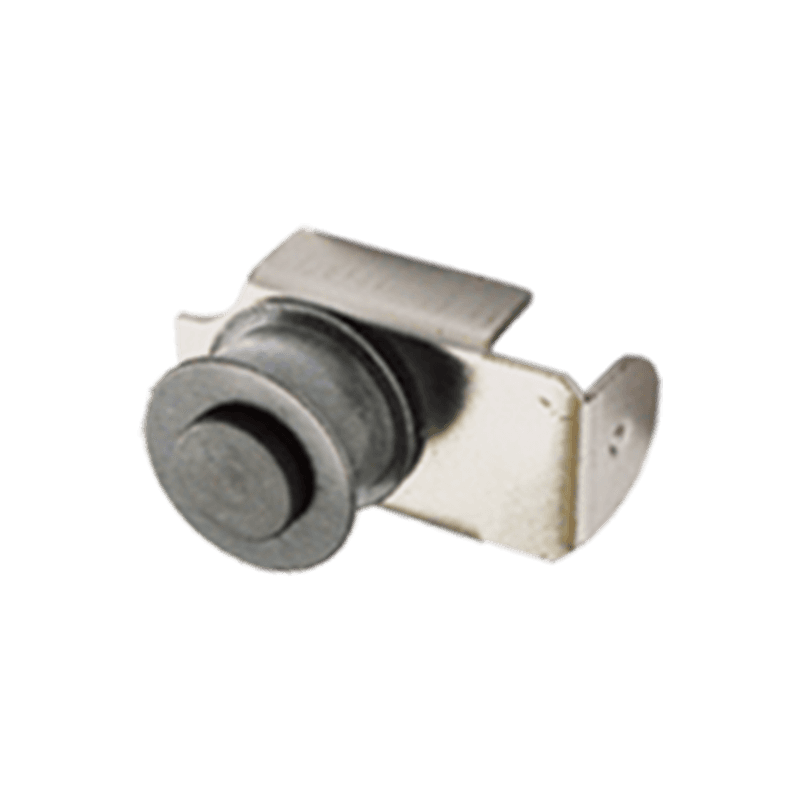
Installation Is Only One Part of the Repair
A replacement component interacts with the parts around it. Once a worn component has been removed, the technician may discover changes in adjacent surfaces, fasteners, guides, or other moving elements.
This is why a repair should begin with an inspection of the complete working area. Installing a new component without checking its surrounding mechanism can leave the original operating problem partially unresolved.
Check the Original Cause Before Replacing the Part
A visible worn part is not necessarily the only cause of a machine problem. For example, unusual movement or inconsistent sewing may involve alignment, contamination, incorrect adjustment, or wear in another connected component.
Before ordering a replacement, maintenance personnel can consider:
- What changed in machine performance?
- When did the problem appear?
- Which operating function is affected?
- Which components move together during that function?
- Has the machine recently been adjusted or serviced?
This process helps connect the symptom with the mechanism instead of selecting a replacement based only on appearance.
Alignment Can Influence the Final Result
Many cutting and sewing mechanisms depend on controlled relative movement. If a replacement part is installed but its position is not correctly aligned with related components, the machine may continue to show inconsistent performance.
The exact adjustment procedure depends on the machine design and should follow the applicable technical documentation. From a manufacturing perspective, this also means that important dimensions, mounting points, and working surfaces need to be controlled during production.
For buyers, asking how dimensional consistency is checked can provide useful information when evaluating a spare-parts supplier.
Inspect Mating Parts During Replacement
A new component can work poorly if another part in contact with it is already worn or damaged. This is particularly relevant for assemblies involving repeated movement, contact, tension, or mechanical transmission.
A technician can inspect the surrounding assembly for:
- Abnormal wear marks
- Loose mounting points
- Damaged contact surfaces
- Incorrect clearance
- Accumulated lint or residue
- Signs of misalignment
The purpose is not to replace every component in the assembly, but to make sure the new part is installed into a suitable working environment.
Test the Machine Under Real Conditions
A component that looks correct during a stationary inspection still needs to perform during actual machine operation. Cutting and sewing equipment can behave differently when material is introduced and the mechanism operates through its normal working cycle.
After installation, technicians should follow the machine's appropriate testing procedure and observe the relevant function. Depending on the equipment, this may include checking cutting consistency, fabric feeding, stitch formation, mechanical movement, or other application-specific results.
This practical test can reveal issues that are not visible when the machine is simply running without a production load.
Keep Replacement Records for Future Maintenance
A record of replaced components can make future troubleshooting more efficient. It does not need to be complicated. The machine model, part identification, replacement date, observed problem, and basic test result can already provide useful historical information.
Recent textile machinery research has placed greater emphasis on combining machine condition, maintenance history, and spare-parts availability when planning maintenance activities.
For production teams, these records can also help identify whether a recurring problem is related to one component or to a broader mechanical condition.
Clear Technical Communication Saves Time
When purchasing replacement components, detailed technical information can reduce unnecessary back-and-forth between the factory and supplier.
Our News //
Related News



Contact Us //
Have Questions? Get in Touch!

Jinzen Intelligent Technology (Dongyang) Co., Ltd. was founded in 1983, focusing on sewing machine accessories and auxiliary equipment.

Quick Links
Related Products
Contact
- Add: No. 46-1, Dongsheng Road, Hulu Town, Dongyang City, Jinhua City, Zhejiang Province
- Tel: +86-579-8615 0008 / +86-579-8615 2008
- Fax: +86-579-8615 1368 / +86-579-8615 2273
- Email: zhenhua@jinzen.cc
© 2023 Jinzen Intelligent Technology (Dongyang) Co., Ltd.
Sewing Machine Replacement Spares Parts Suppliers

