


 Español
 中文简体
 عربى
- JINZEN Sewing Machine Spare Parts
- JINZEN Accessories
- JUKI Sewing Machine Spare Parts
- BROTHER Sewing Machine Spare Parts
- PEGASUS Sewing Machine Spare Parts
- SIRUBA Sewing Machine Spare Parts
- KANSAI Sewing Machine Spare Parts
- YAMATO Sewing Machine Spare Parts
- Kingtex Sewing Machine Spare Parts
- JACK Sewing Machine Spare Parts
- Other Brand Sewing Machine Spare Parts
- Household Sewing Machine Spare Parts
- Cutting Sewing Machine Spare Parts
- Leather Sewing Machine Spare Parts
What Makes Precision Spare Parts Important for Faster Sewing Machine Setup?
Industry News-In garment manufacturing, time spent adjusting an industrial sewing machine can become a hidden production cost, particularly when several machines are used for different fabrics, stitch types or product specifications. A replacement component may fit the machine mechanically, yet still require repeated adjustments if its dimensions, surface condition or working position are inconsistent. For manufacturers and purchasing teams, sewing machine spare parts should therefore be evaluated not only by compatibility and price, but also by dimensional consistency and their ability to support repeatable machine setup.
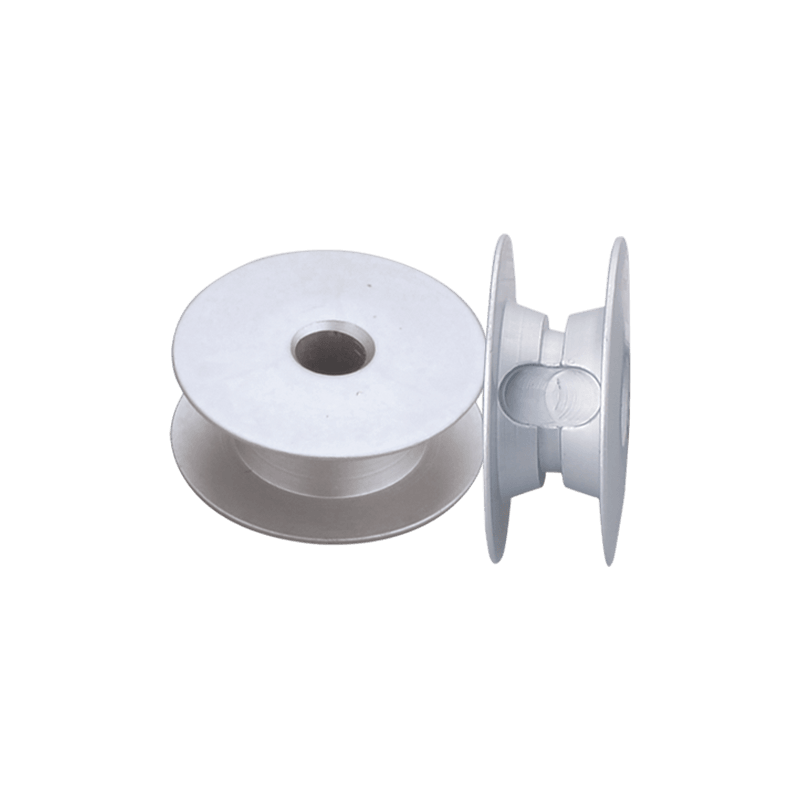
Dimensional Consistency Reduces Unnecessary Adjustments
Industrial sewing mechanisms depend on coordinated movement between the needle, hook, feed system, presser foot and other components. When a replacement part differs from the approved specification, technicians may need additional time to check clearances, reposition components or correct alignment.
This becomes more noticeable when a factory operates several machines of the same model. Consistent replacement components allow technicians to follow established adjustment procedures instead of treating every installation as a separate troubleshooting task.
For OEM suppliers, maintaining stable dimensions during machining, stamping or forming is therefore an important part of repeatable production.
Precision Supports Correct Component Alignment
Many sewing machine components operate within compact mechanical assemblies where positioning directly affects performance. Needle plates, feed dogs, presser feet, hooks and related components must interact correctly with surrounding mechanisms.
During manufacturing, critical features may require inspection, including:
- Overall dimensions and key tolerances
- Mounting holes and positioning
- Contact surfaces
- Edge condition
- Consistency between production batches
These controls help buyers reduce uncertainty when replacing components on machines already operating in production.
Surface Finish Also Affects Setup
Dimensional accuracy is only one consideration. Burrs, uneven surfaces or unsuitable finishing can interfere with components that repeatedly contact thread, fabric or other moving parts.
For parts exposed to continuous movement, appropriate surface finishing can support smoother interaction with mating components. It can also reduce the need for technicians to manually correct or modify a replacement part before installation.
For this reason, experienced procurement teams often assess a supplier's machining and finishing capabilities rather than selecting components based only on catalogue specifications.
Repeatability Matters Across Multiple Machines
A single machine can often be adjusted by an experienced technician without causing major disruption. The challenge becomes more significant when a factory operates many machines producing similar garments or textile products.
If replacement components vary between batches, technicians may encounter different installation conditions on machines using the same model. This can make maintenance less predictable and increase the time required for setup.
Standardized components provide a more consistent reference. Once a replacement part has been approved and its installation requirements documented, the same specification can be used for future machines and repeat orders.
Make Installation Easier for Maintenance Teams
A well-managed spare-part program should help technicians identify and install the correct component without unnecessary trial and error. Clear product identification and technical information are especially useful when factories maintain machines from several generations or suppliers.
Purchasing teams can request information such as:
- Compatible machine models
- Original part references
- Critical dimensions
- Material specifications
- Surface treatment requirements
- Recommended application
Providing these details before ordering helps maintenance teams confirm suitability and reduces the possibility of receiving a technically similar but unsuitable component.
Quality Control Should Extend Beyond the First Sample
Sample approval is only the beginning of a reliable supply relationship. For repeat orders, buyers also need confidence that production batches will remain consistent with the approved sample.
A practical quality system may include material verification, in-process inspection and final dimensional checks. Manufacturers can also maintain production records for critical components so that recurring orders can be produced against an established specification.
This is particularly valuable for distributors and garment factories that purchase replacement components regularly and need predictable performance across different batches.
Precision Is Part of Production Reliability
Faster machine setup does not come simply from choosing a replacement component that fits physically. It depends on how accurately that component matches the machine's mechanical requirements and how consistently the same specification can be reproduced.
For overseas garment manufacturers and industrial equipment buyers, selecting dependable sewing machine spare parts means considering dimensional control, surface finishing, repeatability and manufacturing quality together. When these factors are addressed during sourcing, replacement components can help maintenance teams achieve more predictable setup, reduce unnecessary adjustments and keep sewing equipment operating with greater consistency.
Our News //
Related News


Contact Us //
Have Questions? Get in Touch!

Jinzen Intelligent Technology (Dongyang) Co., Ltd. was founded in 1983, focusing on sewing machine accessories and auxiliary equipment.

Quick Links
Related Products
Contact
- Add: No. 46-1, Dongsheng Road, Hulu Town, Dongyang City, Jinhua City, Zhejiang Province
- Tel: +86-579-8615 0008 / +86-579-8615 2008
- Fax: +86-579-8615 1368 / +86-579-8615 2273
- Email: zhenhua@jinzen.cc
© 2023 Jinzen Intelligent Technology (Dongyang) Co., Ltd.
Sewing Machine Replacement Spares Parts Suppliers

